
In the dynamic world of digital communication, messaging apps play a crucial role in connecting people globally. The introduction of sophisticated Text-to-Speech (TTS) systems for these messaging apps marks a significant advancement. This article explores how Rudder Analytics collaborated with a leading messaging application developer to improve user accessibility and engagement. The aim was to make digital communication more inclusive and provide a more immersive experience for a varied audience.
The Challenge: Crafting Natural-Sounding Speech
Traditional TTS systems, while impressive, often fall short of capturing the full range and expressiveness of human speech. Our challenge was to develop a system that could convert text to speech smoothly, focusing on achieving a natural sound. Our goal was to closely mimic human speech’s pitch, rhythm, and emphasis variations, retaining the emotional and contextual richness that characterizes personal communication.
A crucial part of this challenge was ensuring the system could accurately pronounce a wide range of words, including common language, specific proper names, acronyms, and jargon, all within the correct context. This precision was essential for a smooth and accurate communication experience. We aimed to narrow the gap between synthesized and natural speech, making every generated speech sound as authentic as a real conversation.
Selecting the Right Tools: Coqui TTS and Glow-TTS
To effectively tackle the complexities of this challenge, a strategic approach was necessary. This involved the careful selection of tools and architectural frameworks that could fully leverage the latest technological advancements.
We chose Coqui TTS for its extensive language support and adaptability in fine-tuning and training across various linguistic contexts. Alongside, we utilized the Glow-TTS architecture, known for its efficient flow-based generative model for speech synthesis. This combination was key in producing expressive and lifelike speech, capturing the nuanced cadences and inflections of human conversation.
Building a Foundation: A Diverse and Rich Dataset
The success of AI technologies heavily relies on the quality and diversity of the training data. For our TTS system, we compiled a comprehensive dataset that included a wide range of text inputs and corresponding speech outputs, ensuring linguistic variety. This variety was crucial for training our model to handle the complexities of spoken language, making the synthesized speech sound natural and contextually appropriate.
Data Preparation and Optimization
We meticulously prepared our data, focusing on restructuring, formatting, and normalization to optimize it for model training. This preparation was vital for addressing the natural variability in language and enhancing the model’s learning efficiency. Phonetic transcription played a key role in improving the model’s pronunciation accuracy, bringing us closer to achieving our goal of natural-sounding speech.
Advanced Model Training and Real-Time Monitoring
Leveraging the computational capabilities of the NVIDIA A10 GPU, we undertook intensive training of our TTS model. Real-time monitoring through Tensorboard provided critical insights into the model’s performance, enabling continuous refinement and optimization. This combination of cutting-edge hardware and sophisticated monitoring tools allowed us to continuously refine and enhance our model.
Measuring Success: Outcomes and Feedback
The TTS system’s effectiveness was confirmed by a low Word Error Rate (WER) of 3%, indicating a high level of accuracy in speech reproduction. However, the most significant measure of success was the positive feedback from users, with 68% finding the synthesized speech to be more natural and engaging. The system’s multilingual capabilities further extended its reach and applicability.
A particularly noteworthy impact of this project was the increased engagement from users with visual impairments, highlighting our contribution to digital inclusivity. The engagement from visually impaired users rose from 5% to 15% of the total platform engagement, underscoring the importance of accessible digital platforms.
Speech AI built on your own calls and recordings
Rudder Analytics builds speech recognition, voice agents and audio analytics that run in production.
Keep reading
Related Blogs
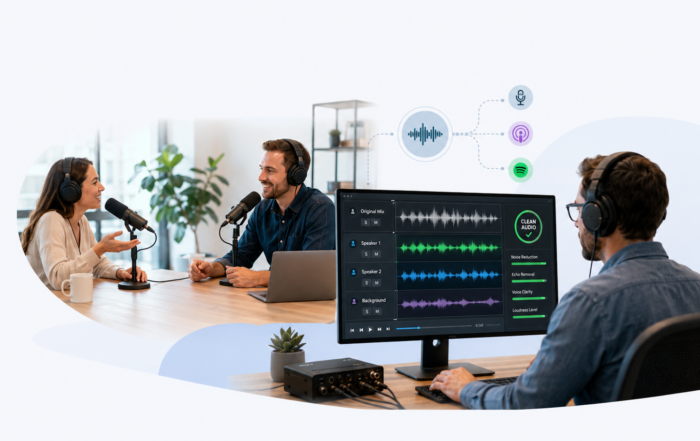
Enhancing Podcast Audio Clarity with Advanced Speech Separation Techniques
Podcasts have become a thriving medium for storytelling, education, and entertainment.
Read blog
Optimizing Call Management with Advanced Voice Activity Detection Technologies
In today’s fast-paced digital landscape, contact centers need innovative solutions to enhance communication…
Read blog
Mastering Speech Emotion Recognition for Market Research
In the rapidly evolving world of market research, understanding consumer sentiments and preferences is crucial for…
Read blog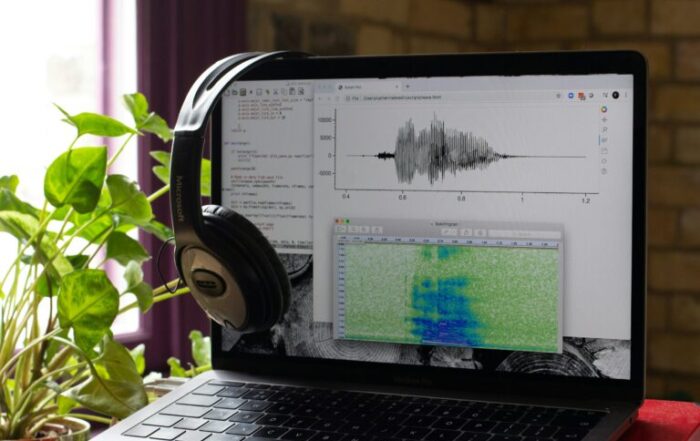
A Deep Dive into Phoneme-Level Pronunciation Assessment
In the rapidly evolving digital education domain, our team at Rudder Analytics embarked on a pioneering project.
Read blog